6.2.18

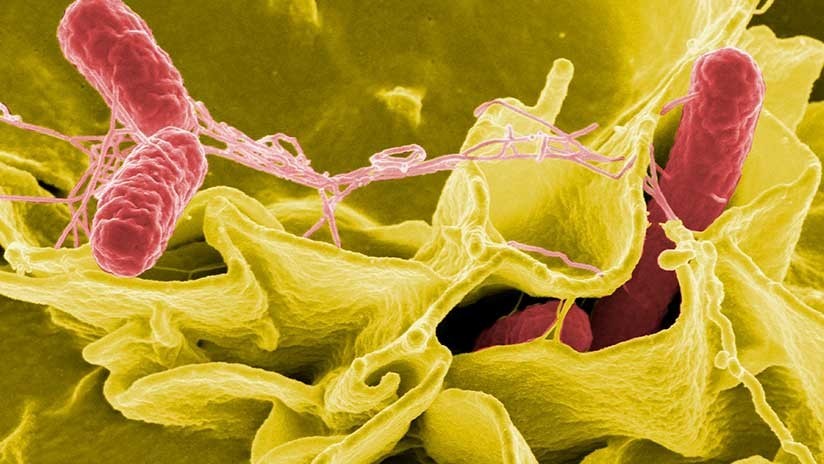
Científicos descubren cómo una bacteria convierte toxinas en oro


pixabay.com / skeeze

En un estudio realizado en el año 2009, expertos alemanes y australianos demostraron que la bacteria C. metallidurans puede producir oro de manera biológica.

Un equipo de científicos alemanes y australianos ha desentrañado los procesos molecurales que tienen lugar en el interior del bacilo C. metallidurans, una bacteria capaz de digerir metales tóxicos y convertirlos en oro. Los investigadores difundieron los resultados en un estudio publicado el pasado miércoles. El equipo científico está formado por expertos de la Universidad Martín Lutero (UML), de Halle-Wittenberg, en Alemania, la Universidad Técnica de Munich y la Universidad de Adelaida, en Australia.

La bacteria C. metallidurans vive principalmente en suelos con alto contenido de metales pesados. Con el paso del tiempo, algunos minerales se descomponen y liberan metales pesados tóxicos e hidrógeno en su entorno. Pero más allá de la prensencia de estos últimos, "las condiciones de vida en esos suelos no son malas. Hay suficiente hidrógeno para conservar energía y casi no hay competencia. Si un organismo opta por sobrevivir aquí, tiene que encontrar una manera de protegerse de estas sustancias tóxicas; la bacteria C. metadillurans lo ha hecho", asegura Dietrich H. Nies, profesor de microbiología molecular en la UML y autor principal del estudio.

El oro se introduce en la bacteria del mismo modo que lo hace el cobre. El cobre es un elemento vital para la bacteria C. metadillurans, pero es tóxico en grandes cantidades. Cuando las partículas de cobre y oro entran en contacto con dicha bacteria, se produce una serie de procesos químicos. Si se hallan ambas en el interior de la bacteria, se suprime la enzima CupA, que es la encargada de expulsar las partículas de cobre, en tanto que los compuestos tóxicos de cobre y oro permanecen en el interior de la célula.

Las bacterias activan entonces la enzima Cop A, la cual transforma los compuestos de ambos metales en  formas originalmente díficiles de ser absorbidos, de modo que menos compuestos de cobre y oro entran en el interior de la célula. En consecuencia, se elimina el exceso de cobre, y los compuestos de oro, que son díficiles de absorber, se convierten en pepitas en el área exterior de la célula.

La bacteria C. metallidurans juega un papel fundamental en la formación del llamado oro secundario, que se genera en la naturaleza a raíz de la descomposición de minerales de oro primarios. El estudio realizado por el equipo científico germano-australiano ha proporcionado información relevante sobre el ciclo biogeoquímico del metal precioso. En un estudio realizado en el año 2009, los científicos habían ya demostrado que la bacteria C. metallidurans puede producir oro de manera biológica. Pero desconocían el porqué de este proceso de conversión. 

16.12.17

Staggering e-waste numbers revealed in grim new report


Last year, we “smart” humans threw away 44.7 million metric tonnes of things with a plug or battery – everything from refrigerators and television sets to solar panels and mobile phones. To put that in more visual terms, imagine 1.23 million 18-wheel trucks filled to capacity with e-waste – enough trucks to line up bumper-to-bumper from New York to Bangkok and back. (A metric tonne is equal to around 1.1 US tons, or about 2,204 pounds.)

Given that we generated 8 percent more than we did just two years prior, things aren’t looking very good. And in fact, according to a new UN-backed report, we can expect to see a further 17 percent increase of e-waste, to 52.2 million metric tonnes, by 2021. E-waste is the fastest growing part of the world's domestic waste stream.


The new report, Global E-waste Monitor 2017 is a group effort between the United Nations University (UNU), represented through its Sustainable Cycles (SCYCLE) Programme hosted by UNU's Vice-Rectorate in Europe, the International Telecommunication Union (ITU), and the International Solid Waste Association (ISWA). The basic gist is that falling prices have made electronics affordable for most people worldwide; meanwhile, people in wealthier countries are being increasingly lured to buy early equipment replacement or new things altogether.

Here’s how it looks by the numbers:

9: The number of great pyramids that are equal in weight to the amount of e-waste generated last year.

20 percent: The amount of that e-waste that was recycled in 2016.

4 percent: The amount of 2016 e-waste known to have been thrown into landfills.

76 percent: The amount of 2016 e-waste that was incinerated, in landfills, recycled in informal (backyard) operations or remains stored in our households.

$55,000,000,000: The value of gold, silver, copper, other high value recoverable materials that were not recovered.


6.1 kilograms (13.4 pounds): The average amount of e-waste generated globally per person in 2016.

11.6 kilograms (25.5 pounds): The average amount of e-waste generated in the Americas per person in 2016.

17 percent: The amount of e-waste recycled in the Americas in 2016.

3: The number of electrical and electronic equipment categories that account for 75 percent of global e-waste by weight, and also expected to see the most growth:

Small equipment, like vacuum cleaners, microwaves, ventilation equipment, toasters, electric kettles, electric shavers, scales, calculators, radio sets, video cameras, electrical and electronic toys, small electrical and electronic tools, small medical devices, small monitoring and control instruments.Large equipment, like washing machines, clothes dryers, dish-washing machines, electric stoves, large printing machines, copying equipment, photovoltaic panels).Temperature exchange equipment, like refrigerators, freezers, air conditioners, heat pumps.


7.4 billion: The world population.

7.7 billion: The number of mobile-cellular subscriptions.

36 percent: The number of Americans who own a smartphone, a computer, and a tablet.

2 years: The far end of an average smartphone lifecycle in the USA, China, and major EU countries.

1 million tons: The weight of all the chargers for mobile phones, laptops et cetera, produced each year.


If there's a bright side to this dark mess, it's that more countries are adopting e-waste legislation, the report says, noting that 66 percent of the world's people live in the countries that have national e-waste management laws; an increase of 44 percent since 2014.

Also, although we’re making more and more stuff, some of it is getting smaller. Waste for small IT and telecommunication equipment (mobile phones, GPS, pocket calculators, routers, personal computers, printers, telephones, et cetera) is expected to grow less quickly by weight due to miniaturization.

Likewise, little growth is expected for lamps (fluorescent lamps, high intensity discharge lamps, LED lamps). And as heavy CRT screens for televisions, monitors, laptops, notebooks, and tablets are replaced with flat panel displays, e-waste from this category is expected to decline.

Just as Tom Waits sings, “you can never hold back spring,” so too can we not hold back digital progress. But we most certainly can make an effort to better design components used in electrical and electronic equipment, as well as devise better methods for recycling and recovering. All of which this report calls for.

"We live in a time of transition to a more digital world, where automation, sensors and artificial intelligence are transforming all the industries, our daily lives and our societies,” says Antonis Mavropoulos, President, International Solid Waste Association (ISW). “E-waste is the most emblematic by-product of this transition and everything shows that it will continue to grow at unprecedented rates. Finding the proper solutions for e-waste management is a measure of our ability to utilise the technological advances to stimulate a wasteless future and to make circular economy a reality for this complex waste stream that contains valuable resources. But first, we need to be able to measure and collect data and statistics on e-waste, locally and globally, in a uniform way. The Global E-Waste Monitor 2017 represents a significant effort in the right direction."

And of course, on a consumer level we can fight the cause of the problem: We can treat our equipment as if it were precious, not disposable. We can resist the siren song of shiny new things, take care of what we have, repair when we can and donate when we can't ... and when all else fails, recycle responsibly.

28.7.17

RECICLA ECOLOGÍA 69 TONELADAS DE DESPERDICIOS ELECTRÓNICOS


Ciudad Juárez.- La Dirección de Ecología ha logrado reciclar un total de 69 toneladas de residuos electrónicos para evitar que fueran a dar al relleno sanitario y contribuyan a la emisión de gases venenosos, esto lo dio a conocer Jürgen Ganser Carbajal titular de la dependencia.

Informó que las 65 toneladas de aparatos electrónicos fueron acumuladas en los últimos tres meses gracias a la campaña “Juárez Recicla”; mientras el programa “Ponte las Pilas” para el reciclaje de baterías electrónicas ha logrado acumular 4 toneladas.

Explicó que en la campaña Juárez Recicla, personal de la dependencia colocó cuatro centros de acopio con contenedores especiales para la recepción de los residuos, habiendo capacitado al personal responsable sobre el manejo apropiado de estos materiales.

“Cuando una pantalla de televisión o una lámpara se rompe libera un gas dañino para la salud, por eso ofrecimos a los un curso de cuatro horas sobre como reconocer los residuos electrónicos, así como las medidas de control y seguridad en su manejo”, comentó el funcionario.

Los contenedores de Juárez Recicla están ubicados en las estaciones de bomberos número 2 (parque Borunda), número 4 (calles Faraday y Gómez Morín), número 8 (Barranco Azul y Eje Vial Juan Gabriel); y uno más en las oficinas administrativas José María Morelos y Pavón (avenida Lincoln).

Dijo además que la campaña Ponte las Pilas ha recibido muy buena aceptación y participación de la comunidad, quien tomando conciencia del riesgo para el medio ambiente y para la salud contribuyó a reunir 4 mil kilógramos de baterías electrónicas.

Para esto, personal de la Dirección de Ecología colocó un total de 60 contendores para la recepción de baterías en las unidades administrativas “Lic. Benito Juárez” y “José María Morelos y Pavón”, en los campus de la Universidad Autónoma de Ciudad Juárez y en 50 tiendas de auto servicio.

Las 65 toneladas de aparatos fueron entregados a la empresa Ecorecikla, quien se encargó de reciclar y rehusar los componentes químicos de los residuos; mientras que las baterías fueran trasladadas a Nuevo León para su confinamiento según se informó

24.5.17

Recicladores de residuos electrónicos se transforman en una empresa social


Empezar a andar. Emprendedores que trabajan en el Centro de Convivencia Barrial (CCB) del barrio Molino Blanco y que depende del Distrito Sur, celebraron la firma un convenio de trabajo que permitirá el desarrollo y crecimiento en el reciclado de residuos electrónicos.

En efecto, en el CCB, enclavado en el sur del sur rosarino, funciona, desde 2014, el programa de reciclado de Residuos de Aparatos Eléctricos y Electrónicos (Raee), el cual firmó un convenio entre la Municipalidad de Rosario y Njambre (ver aparte), con la meta de convertirse en una empresa social.

La tarea del CCB es recibir los residuos electrónicos e informáticos domiciliarios que la Municipalidad recolecta en forma gratuita los últimos viernes y sábado de cada mes y procesarlos.

En este sentido, Antonio Lugo, coordinador del programa explicó que “aquí se recibe el material, se clasifica y se selecciona lo que pueda servir”. Y agregó: “Una parte se utiliza para armar nuevos equipos y el resto se limpia, se manda a moler y con ese producto molido se desarrolla un material reciclado que se vende y genera ingresos”.

Todos los jóvenes que trabajan en este proyecto realizaron una capacitación intensiva de Reciclado de Residuos Informáticos que se dicta en el CCB y que fue el puntapié inicial del proyecto de trabajo.

En este marco, Lugo señaló que “todo esto lo inició el ingeniero Eduardo Rodríguez con un curso de reparación y reciclado de PC, a partir de un convenio de la Municipalidad con el Cecla (Centro de Capacitación Laboral para Adultos)”. “Rodríguez es el profe que todavía da el curso de reciclado y un poco el padre de todos los chicos”, dice Lugo.

HACIA LA EMPRESA SOCIAL

En este marco, para el programa y todos los actores involucrados, la concreción del convenio con Njambre es fundamental y el principio de un paso fundamental hacia la concreción de empresa social.

La historia reciente señala que el pasado 28 de abril fue un día clave para los recicladores de Molino Blanco, ya que la intendenta de Rosario Mónica Fein y el secretario de Economía Social, Nicolás Gianelloni, firmaron el acuerdo tripartito con Njambre y el CCB.

Así, el compromiso es, en el plazo de un año, convertir el espacio en una empresa social basada en el reciclado de residuos informáticos y electrónicos, generando un modelo de negocio sustentable que cuide el medio ambiente y cree condiciones de trabajo dignas.

Esto significa la posibilidad de ampliar el espacio físico pero sobre todo de emplear más jóvenes de manera continua.

“Eso es el objetivo de la institución. Para nosotros es una apuesta muy fuerte porque queremos que los chicos salgan del curso y puedan formar parte de una empresa social, darles una permanencia y estabilidad. Queremos llegar a tener al menos diez pibes laburando”, remarcó Horacio Garbulla, coordinador general del CCB.

Por su parte, Lugo precisó que “la idea es acaparar todo el reciclado de residuos informáticos domiciliarios que recolecta la Municipalidad y que todos esos beneficios queden acá”.

Además, planean ofrecer el mismo servicio a gran escala, para empresas y comercios, y contar con una molienda propia que les permita no tener que tercerizar parte del proceso de reciclado.

“Los chicos han descubierto capacidades y virtudes que no pueden quedar sin explotar. Desde acá hacemos todo para que no se alejen. Por eso, en el mientras tanto, buscamos llevar la mayor cantidad de potenciales emprendedores al programa Rosario Emprende y acompañarlos en ese proceso”, cuenta Garbulla.

El desarrollo del programa de reciclaje de Raee es sólo una de las aristas en las que se trabaja en el CCB de Molino Blanco desde el 2014. Allí también se dictan capacitaciones en panadería y panificación, carpintería, electricidad domiciliaria, además de las de reciclaje y operador de PC. “Además, hay talleres de graffiti y pintura, ajedrez, artes urbanas (circo) y clases de gimnasia”, enumera Garbulla.

Y agregó: “Estamos muy bien y tanto los talleres como las capacitaciones están al ciento por ciento. Cada capacitación tiene alrededor de 15, 16 personas”.

En este marco, el coordinador general del CCB señaló: “Todos funcionan en el marco del programa provincial Nueva Oportunidad para que los chicos reciban una beca y trabajamos con la Secretaría de Economía Social para lograr la inserción laboral después de la formación. Los cursos relacionados a la informática son los que más marcan la identidad del espacio. Ahí los chicos tienen el incentivo de que durante el taller se arman su propia computadora”.

Finalmente, Garbulla remarcó: “El desafío es importante, nosotros queremos que crezca. Que este sea para el barrio el lugar donde estén los pibes”. Una definición conceptual de cara a un futuro complejo.

War on waste: Why we should recycle our old mobile phones

Got a drawer at home that is storing a few of your old mobile phones?

You're not alone.

There are more than 23 million unused phones in Australia according to industry-funded recycler MobileMuster, and they represent a large amount of natural resources that could be recycled.

In fact, each unused phone presents 23 million opportunities to reuse valuable metals, University of Adelaide professor Derek Abbott said.

"As we get more and more advanced devices, there are more unusual elements being used," he said.

"The most advanced Intel microchips use an element in them called hafnium, which is a rare element."

MobileMuster estimates 62 per cent of Australians keep their mobile phones for two years.

One in six reuse or re-gift their phone; of the remainder, only 12 per cent decide to recycle it.

"It's been estimated that if I were to randomly grab one million mobile phones and extract all the gold out of them, there would be over 30 kilograms of gold in there," Professor Abbott said.

In the same amount of phones, Professor Abbott said, there would be more than 300 kilograms of silver.

"The copper would be over 10 tonnes."

Professor Abbott said although the amounts of recoverable per device was small, the overall material available to be recycled from unused phones was massive.

"There are many rare elements in there, and these resources do get stretched.

"It's probably getting to a point where it is cheaper to recycle than it is to dig up more ore and search for this stuff.

"If you had a tonne of old iPhones, the density of gold in there, although it is tiny, is actually 300 times more than in the same tonnage of gold ore.

"Mining old phones, in theory, should be cheaper than going out and mining the ore to start with."

MobileMuster is a free mobile phone recycling service, with donation points throughout Australia and prepaid envelopes available from most post offices.

Australians update their mobile phones every two years on average.

7.5.17

Gold processing bacteria help to recycle electronics

Adelaide - There are species of bacteria that efficient at processing of gold ore. Applications include recycling electronics as well as use in exploration for new deposits. A new study demonstrates the advantages.

The study has been undertaken at the University of Adelaide and it has been running for ten years. The focus is with how gold can be dissolved, dispersed and re-concentrated into nuggets by the activities of microorganisms; a process called biogeochemical processing.

One area of interest is how long the cycle takes to complete and whether the process can be optimized, including speeding up the conversion process. This is with a view to industrializing the microbial activity on a larger scale.

The process is described by Dr Frank Reith in a research brief: "In the natural environment, primary gold makes its way into soils, sediments and waterways through biogeochemical weathering and eventually ends up in the ocean."

With the role of microbes, he adds: "On the way bacteria can dissolve and re-concentrate gold - this process removes most of the silver and forms gold nuggets."

The bacterium that undertakes the process most efficiently is calledDelftia acidovorans. The organism has a King Midas-like touch, and this is a natural part of the organism's self-defense mechanism. Dissolved gold is toxic to the organism, so it has evolved a mechanism to turn poisonous ions into harmless gold particles that eventually accumulate outside of the bacterial cell. A second bacterium species called Cupriavidus metallidurans can also produce gold nuggets.

What the researchers hope is to find an economically viable way of performing gold extraction from ore and re-processing old tailings or recycled electronics. At present this process is costly, meaning that many electronic devices simply end up in landfill sites rather than being recycled for their potentially valuable competes.

The reason the process is costly is because it takes considerable amounts of time. This time is very short in geological terms, but it is too long for any person to make it commercially effective. Through the use of high-resolution electron-microscopy, the time taken for the microbial processing is anything between 3.5 and 11.7 years for each stage of the process, meaning that it could be up to 60 years before gold is completely recovered and processed.

However, new insights into the process mean that innovative processing techniques could be achieved and this represents the next phase of the continuing research project.

The research is published in the journalChemical Geology, under the heading "Secondary gold structures: Relics of past biogeochemical transformations and implications for colloidal gold dispersion in subtropical environments."

6.5.17

Overview of E-waste Recycling Market in Global Industry : Technology, Applications, Growth and Status 2017

ResearchMoz presents professional and in-depth study of "Global E-waste Recycling Market Research Report 2017".

In this report, the global E-waste Recycling market is valued at USD XX million in 2016 and is expected to reach USD XX million by the end of 2022, growing at a CAGR of XX% between 2016 and 2022.

Geographically, this report is segmented into several key Regions, with production, consumption, revenue (million USD), market share and growth rate of E-waste Recycling in these regions, from 2012 to 2022 (forecast), covering
United States
EU
China
Japan
South Korea
Taiwan

Global E-waste Recycling market competition by top manufacturers, with production, price, revenue (value) and market share for each manufacturer; the top players including
SIMS RECYCLING SOLUTION
Stena Techno World
Kuusakoski
Umicore
environCom
WASTE MANAGEMENT
Eletronic Recyclers International
GEEP
CIMELIA Resource Recovery
Veolia
Gem
Dongjiang

On the basis of product, this report displays the production, revenue, price, market share and growth rate of each type, primarily split into
Infocomm Technology (ICT) Equipment
Home Appliances

Get PDF for more Professional and Technical insights @ http://www.researchmoz.us/enquiry.php?type=S&repid=1048945

On the basis on the end users/applications, this report focuses on the status and outlook for major applications/end users, consumption (sales), market share and growth rate of E-waste Recycling for each application, including
Enterprise
Government
ENGO

Table of Contents

2 Global E-waste Recycling Market Competition by Manufacturers
2.1 Global E-waste Recycling Capacity, Production and Share by Manufacturers (2012-2017)
2.1.1 Global E-waste Recycling Capacity and Share by Manufacturers (2012-2017)
2.1.2 Global E-waste Recycling Production and Share by Manufacturers (2012-2017)
2.2 Global E-waste Recycling Revenue and Share by Manufacturers (2012-2017)
2.3 Global E-waste Recycling Average Price by Manufacturers (2012-2017)
2.4 Manufacturers E-waste Recycling Manufacturing Base Distribution, Sales Area and Product Type
2.5 E-waste Recycling Market Competitive Situation and Trends
2.5.1 E-waste Recycling Market Concentration Rate
2.5.2 E-waste Recycling Market Share of Top 3 and Top 5 Manufacturers
2.5.3 Mergers & Acquisitions, Expansion

3 Global E-waste Recycling Capacity, Production, Revenue (Value) by Region (2012-2017)
3.1 Global E-waste Recycling Capacity and Market Share by Region (2012-2017)
3.2 Global E-waste Recycling Production and Market Share by Region (2012-2017)
3.3 Global E-waste Recycling Revenue (Value) and Market Share by Region (2012-2017)
3.4 Global E-waste Recycling Capacity, Production, Revenue, Price and Gross Margin (2012-2017)
3.5 United States E-waste Recycling Capacity, Production, Revenue, Price and Gross Margin (2012-2017)
3.6 EU E-waste Recycling Capacity, Production, Revenue, Price and Gross Margin (2012-2017)
3.7 China E-waste Recycling Capacity, Production, Revenue, Price and Gross Margin (2012-2017)
3.8 Japan E-waste Recycling Capacity, Production, Revenue, Price and Gross Margin (2012-2017)
3.9 South Korea E-waste Recycling Capacity, Production, Revenue, Price and Gross Margin (2012-2017)
3.10 Taiwan E-waste Recycling Capacity, Production, Revenue, Price and Gross Margin (2012-2017)

Make an Enquiry of this report @ http://www.researchmoz.us/enquiry.php?type=E&repid=1048945

4 Global E-waste Recycling Supply (Production), Consumption, Export, Import by Region (2012-2017)
4.1 Global E-waste Recycling Consumption by Region (2012-2017)
4.2 United States E-waste Recycling Production, Consumption, Export, Import (2012-2017)
4.3 EU E-waste Recycling Production, Consumption, Export, Import (2012-2017)
4.4 China E-waste Recycling Production, Consumption, Export, Import (2012-2017)
4.5 Japan E-waste Recycling Production, Consumption, Export, Import (2012-2017)
4.6 South Korea E-waste Recycling Production, Consumption, Export, Import (2012-2017)
4.7 Taiwan E-waste Recycling Production, Consumption, Export, Import (2012-2017)